
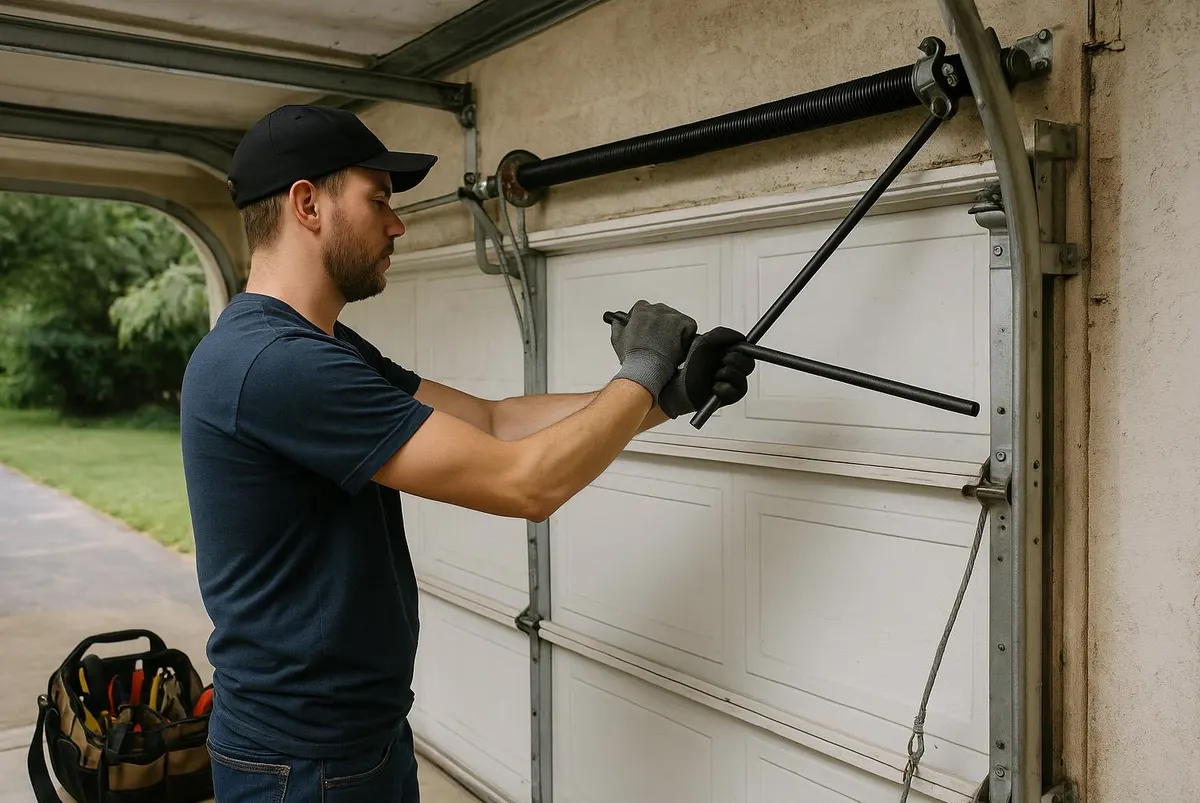
What a Technician Usually Finds
A typical service call starts the same way: a homeowner backed a car into the door, a plow or snowblower clipped the bottom panel over the winter, or years of road salt and freeze-thaw cycles finally ate through the lower section near the weatherstripping. The door still opens and closes, mostly, but there's a visible dent, a crack in the seam, or rust bubbling up through the paint. The first question is always the same: can you just replace that one panel, or does the whole door need to go?
The honest answer depends on the age of the door, how it's built, and what else is going on with the springs, track, and opener. Here's how the two options actually compare.
Replacing Just the Damaged Panel
What It Involves
Most sectional garage doors are built from individual panels stacked and hinged together, so in theory a single damaged section can be unbolted and swapped out without touching the rest of the door. A technician removes the hinges and rollers from the damaged panel, lifts it out, and installs a matching replacement.
The Upside
- Lower cost than a full replacement, since you're only paying for one section plus labor.
- Less disruption — the job is usually done in a single visit.
- Keeps the rest of a structurally sound door in service.
The Catch
Panel replacement only works cleanly if the manufacturer still makes that exact panel, or if a compatible match exists. On many of the older homes around here with original doors — some installed decades ago — the exact style, panel ridge pattern, or color has long since been discontinued. You can end up with a visibly mismatched panel, especially once sun fading and years of salt spray have changed the finish on the rest of the door. There's also a structural question: if one panel rusted or cracked from years of freeze-thaw exposure at the bottom, the panels above it may be only a few seasons behind, meaning you could be back for another repair soon.
Replacing the Entire Door
What It Involves
A full replacement means removing the old door, springs, and track, and installing a new door system matched to the opening, insulation needs, and opener.
The Upside
- Uniform appearance — no mismatched panel, no faded-versus-new color line.
- A chance to upgrade insulation, which matters for homes with living or storage space above or behind the garage during humid summers and cold winters.
- New weatherstripping and hardware throughout, reducing the odds of the next freeze-thaw cycle finding a weak spot.
- Often comes with a warranty covering the whole system, not just a patched section.
The Catch
Full replacement costs more up front — nationally, a new garage door installation typically runs anywhere from the low thousands to several thousand dollars depending on material, insulation, and size, though your technician can quote the specifics for your door. It's also a bigger job, generally requiring a half-day to a full day of work, and if the opener or springs are old, those may need attention too once the door's weight or balance changes.
How to Decide
A few practical questions help sort this out on an actual service call:
- How old is the door? If it's within the last several years and otherwise in good shape, a matching panel is usually available and worth trying first.
- Is the damage isolated, or is there rust/corrosion spreading along the bottom edge? Salt-laden runoff from winter driveways tends to attack the lowest panel first; if corrosion is working its way up, a single swap is a short-term fix.
- Does the color or panel style still match? On original doors from older housing stock, this is often the deciding factor — a technician can check availability before you commit either way.
- Are the springs and opener original to the door? If they're due for service anyway, it may make more sense to handle everything at once rather than invest in a patch and then redo the opener setup a year later.
What Makes Sense for Typical Homes Here
For a newer door with one clearly isolated dent — say, from a one-time backing-up accident — a single panel replacement is usually the practical, lower-cost choice. But for the many homes in this area with original doors that have weathered repeated nor'easters, years of salt exposure, and multiple freeze-thaw cycles, a damaged panel is often a sign the rest of the door isn't far behind. In those cases, a full replacement with better insulation and new weatherstripping tends to be the better long-term investment, even though it costs more initially.
When to Call Scarsdale Garage Door
If you're staring at a dented or rusted panel and aren't sure which way to go, that's exactly the kind of call we take every week. A technician can inspect the panel, check whether a matching replacement exists, and look at the condition of the springs, track, and opener while they're there — because those often factor into the real cost comparison. We handle both Garage Door Repair for isolated panel damage and full Garage Door Installation when a door has reached the end of its practical life, and we can walk you through the trade-offs for your specific door before any work starts.
If you're weighing a panel repair against a full replacement, give Scarsdale Garage Door a call — we serve homeowners throughout Scarsdale, NY and the surrounding Westchester County area and can give you a straight answer based on what we actually see at your door.